TL;DR
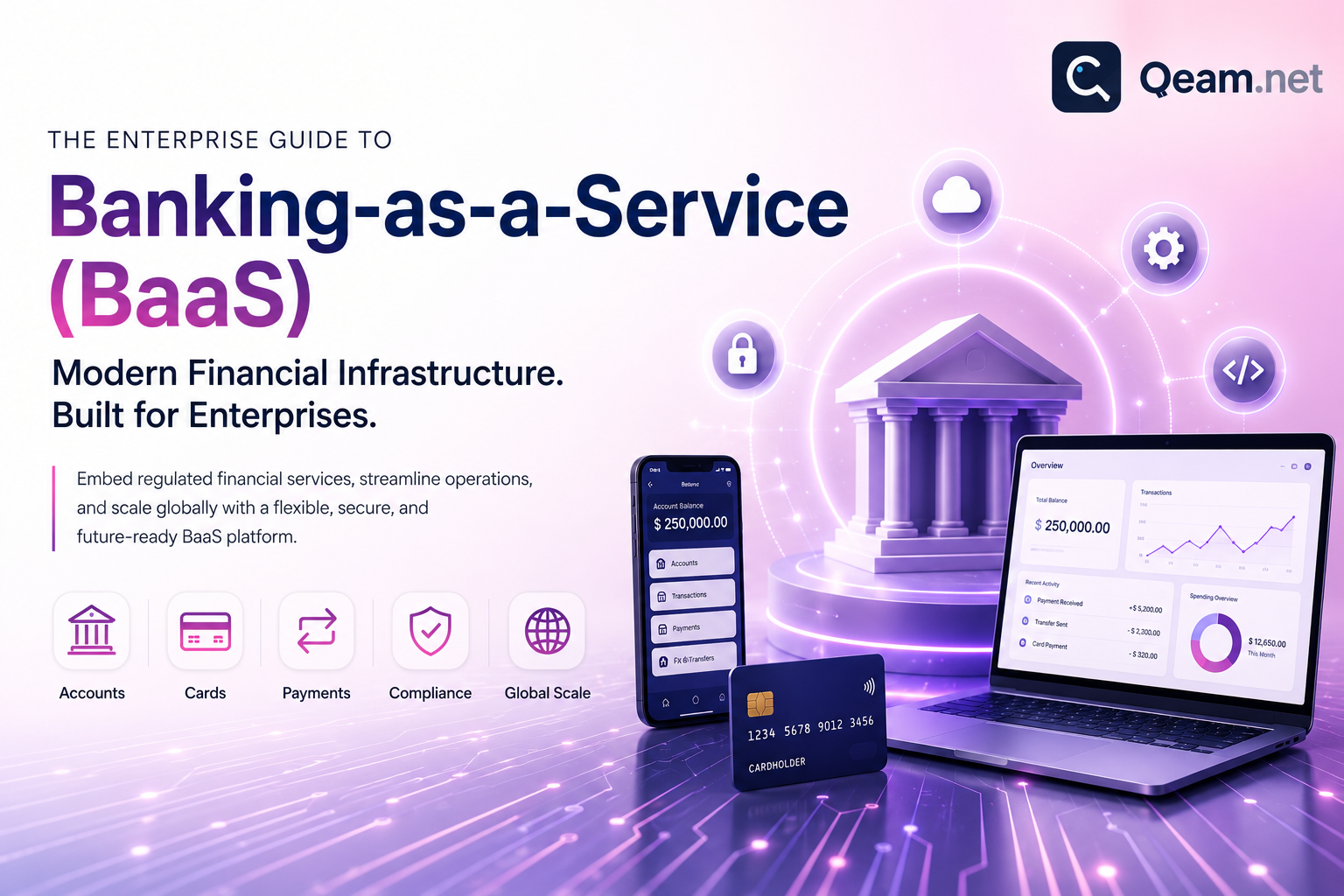
Banking-as-a-Service (BaaS) allows non-bank companies to embed regulated financial products into their software.
Common embedded products include:
Bank accounts
Virtual and physical cards
Payments
FX
Wallets
Cross-border transfers
Enterprises can launch financial services without obtaining a banking charter themselves.
In 2026, the major BaaS questions have shifted from API access to:
Sponsor bank stability
Regulatory jurisdiction
Compliance ownership
Ledger accuracy
Multi-currency reconciliation
Vendor concentration risk
Modern BaaS should therefore be evaluated as core financial infrastructure, not simply as an API integration.
Introduction
BaaS was traditionally positioned as a way to:
Avoid obtaining a banking charter
Access existing banking infrastructure
Launch financial products faster
Reduce upfront capital requirements
Embed banking services directly into software
However, enterprise BaaS has become more complex.
In 2026:
Sponsor banks face greater supervisory scrutiny.
Stablecoins and tokenized deposits are becoming more relevant to financial infrastructure.
Global payment messaging is evolving.
Cross-border compliance requirements continue to diverge by jurisdiction.
Vendor and sponsor bank risk can directly affect business continuity.
For enterprises, this means BaaS decisions must consider three areas simultaneously:
Compliance
Technology
Vendor and banking relationship risk
A trading platform operating across five currencies or a gaming operator making payouts across multiple countries is not simply adding a financial feature.
It is building critical financial infrastructure.
How Does Modern BaaS Architecture Function Behind the API?
Definition
BaaS architecture connects:
A regulated financial institution
A BaaS or middleware provider
An enterprise application
The middleware provides APIs that allow the enterprise to access banking functionality without becoming a bank itself.
The Three Core Layers
1. Sponsor Bank
The sponsor bank:
Holds the banking charter
Provides access to regulated payment infrastructure
Supports payment rails such as:
ACH
SEPA
SWIFT
Card networks
Maintains ultimate regulatory responsibility
2. BaaS Middleware Platform
The middleware typically provides:
API connectivity
Customer onboarding
KYC orchestration
Account provisioning
Ledger functionality
Card issuing
Payment routing
Transaction monitoring integrations
3. Enterprise Application
The enterprise owns the customer-facing product.
It can provide:
Business accounts
Consumer accounts
Cards
Payments
Wallets
FX
Financial dashboards
The experience can appear completely native to the enterprise's platform.
Important Consideration
The middleware provider is generally a technology company rather than a bank.
Therefore:
Customer onboarding decisions ultimately depend on the regulated institution.
Transaction limits can be controlled by the sponsor.
Risk appetite is determined by the regulated partner.
Suspicious activity requirements ultimately flow back to the regulated institution.
Sub-Ledger Infrastructure
BaaS platforms commonly maintain a sub-ledger that:
Tracks individual customer balances
Records transactions
Allocates balances within pooled or omnibus structures
Supports reconciliation
Tracks multiple currencies
The enterprise does not necessarily receive a separate underlying bank account for every end customer.
Instead:
Customer balances are tracked in the sub-ledger.
The underlying funds may sit within a pooled account structure.
Ledger entries represent individual customer ownership.
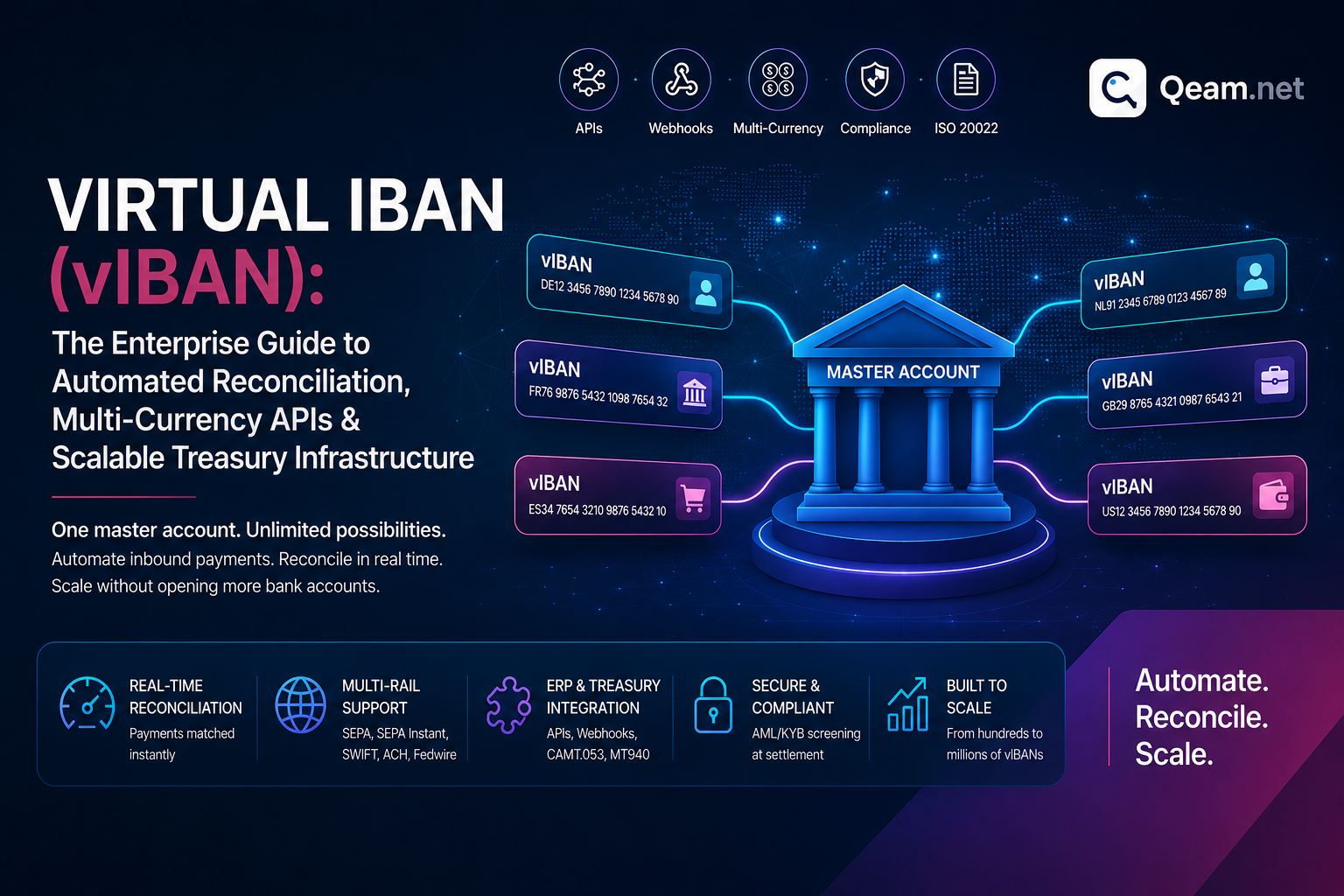
Virtual IBANs
Virtual IBANs can provide:
Local-format account numbers
Customer-specific payment identification
Easier inbound payment routing
Access to multiple markets through a unified integration
This can allow one platform to create a local banking experience across several countries.
Multi-Currency Routing
Multi-currency BaaS infrastructure can support:
EUR
USD
GBP
Other supported currencies
FX conversion may occur through:
The sponsor bank
An integrated FX provider
A dedicated liquidity provider
Traditional Banking vs Modern BaaS
1. Integration Time
Traditional White Label Banking: 12 to 24 months
Modern API Driven BaaS: Weeks to a few months
2. Technical Model
Traditional White Label Banking: Batch files and manual reconciliation
Modern API Driven BaaS: APIs and webhooks
3. Customization
Traditional White Label Banking: Bank controlled UX
Modern API Driven BaaS: Fully brandable
4. Compliance Ownership
Traditional White Label Banking: Primarily bank managed
Modern API Driven BaaS: Shared and contract dependent
5. Multi Jurisdiction Reach
Traditional White Label Banking: Separate relationships per market
Modern API Driven BaaS: Virtual account and banking networks
Example
A cross-border payroll platform may previously have required:
Multiple correspondent banking relationships
Local banking partners
Separate integrations
Market-specific onboarding
With BaaS, it can potentially:
Integrate with one infrastructure provider
Issue virtual accounts
Route payments through supported local rails
Centralize financial operations
Benefits
Faster time to market
Lower upfront capital requirements
No direct banking charter required
Easier product integration
Scalable financial infrastructure
Limitations
The enterprise may not directly control the banking relationship.
Sponsor bank decisions can affect the program.
Contractual protections become critical.
Migration can become difficult if the sponsor relationship ends.
Actionable Advice
Before signing a BaaS agreement:
Clarify who owns the customer relationship.
Define what happens if the sponsor bank exits.
Establish migration timelines.
Confirm access to customer and transaction data.
Review termination and portability clauses.
Example
A trading platform serving customers in:
United States
Germany
UAE
may require:
US sponsor bank infrastructure
EU EMI or payment partner
UAE regulated partner or appropriately licensed entity
This creates three different compliance environments under one product.
Benefits
Early regulatory mapping can:
Prevent licensing gaps
Reduce expansion delays
Improve vendor selection
Reduce compliance surprises
Limitations
One regulatory framework does not automatically satisfy another.
Licenses may have geographic limitations.
Product permissions differ by jurisdiction.
Actionable Advice
Before choosing a BaaS provider:
List every target market.
Identify required licenses.
Identify regulated partners.
Confirm passporting rights where applicable.
Ask which licenses the provider actually holds.
Ask which relationships are contractual partnerships rather than direct licenses.
Why Are High-Velocity Verticals Migrating to Embedded Financial Infrastructure?
Definition
Embedded financial infrastructure integrates financial services directly into an existing business platform.
Instead of customers leaving the platform to use another financial provider, they can access:
Accounts
Payments
Cards
FX
Payouts
Wallets
inside the existing product.
Fintech and Cross-Border Remittance
Traditional correspondent banking can involve:
Multiple intermediary banks
Multiple fees
Settlement delays
Complex reconciliation
BaaS can provide:
Local payment rails
Virtual accounts
API-based payments
Centralized transaction management
Faster payout infrastructure
Key Benefit
A single integration can potentially support multiple payment corridors.
Forex and Multi-Currency Trading
Forex and trading platforms often need:
Multi-currency accounts
Accurate client balances
Real-time liquidity
Margin management
Segregated client funds
FX conversion
BaaS infrastructure can provide:
Multi-currency ledgers
Real-time transaction updates
Automated reconciliation
FX connectivity
Payment routing
Gaming Ecosystems
Gaming operators can face:
High transaction volumes
Frequent payouts
Multiple jurisdictions
Local payment requirements
Multi-currency transactions
BaaS can support:
Localized payout accounts
Payment routing
Multi-currency wallets
Merchant acquiring integrations
However:
Gambling licensing remains separate.
Local regulatory requirements still apply.
BaaS does not automatically solve gaming compliance.
Real-World Use Cases
Cross-Border Remittance
A remittance operator expanding across 30 or more countries can use:
Local virtual accounts
Local payment rails
Centralized API infrastructure
Domestic payout capabilities
This can reduce dependence on lengthy correspondent banking chains.
Trading Platform
A trading platform can use:
Multi-currency ledgers
Real-time balance tracking
Fiat payment infrastructure
Digital asset connectivity
This helps reconcile fiat positions against digital asset exposure more efficiently.
Benefits
Faster settlement
Lower transaction costs at scale
Easier market expansion
Improved user experience
Centralized payment operations
Limitations
BaaS does not replace vertical-specific regulation.
Additional requirements may still apply to:
Gambling
Securities
Remittance
Digital assets
Foreign exchange
Actionable Advice
Budget separately for:
BaaS infrastructure
Financial licensing
Industry-specific licensing
AML compliance
Legal advisory
Regulatory reporting
What Are the Critical Vulnerabilities and Pitfalls in BaaS Partnerships?
Definition
BaaS risk exists because the enterprise depends on external regulated institutions and infrastructure providers.
The largest failures are often not technical.
They are:
Banking relationship failures
Compliance failures
Reconciliation failures
Vendor failures
1. Sponsor Bank Concentration Risk
A sponsor bank may:
Change its risk appetite
Restrict fintech programs
Face regulatory action
Exit specific customer segments
Terminate relationships
The result can include:
Account restrictions
Delayed payments
Customer disruption
Emergency migration
2. Fragmented AML and KYC
Requirements can differ across:
United States
European Union
UAE
Other target markets
Differences may include:
Beneficial ownership thresholds
Customer risk classifications
Suspicious activity definitions
Transaction monitoring requirements
Reporting obligations
3. Reconciliation Complexity
The biggest operational challenge often appears after launch.
Enterprises must reconcile:
Multiple currencies
Refunds
Chargebacks
Payment reversals
Fees
FX conversion
Ledger balances
Bank statements
A successful sandbox integration does not guarantee successful production reconciliation.
Common BaaS Mistakes
Relying on one sponsor bank
Treating compliance as a post-launch activity
Ignoring multi-currency rounding
Failing to test reconciliation at scale
Assuming the middleware provider carries bank-level regulatory responsibility
Failing to maintain independent data
Not planning for sponsor bank termination
Example
A fintech relying entirely on one sponsor bank may face major disruption if that bank:
Enters regulatory restrictions
Stops onboarding new fintech customers
Changes its risk appetite
Migrating tens of thousands of customer accounts may take:
Weeks
Months
Potentially longer
Benefits of Early Risk Planning
Better contractual protection
Stronger business continuity
Easier migration
Improved investor confidence
Better vendor risk management
Limitation
Sponsor bank risk cannot be completely eliminated.
It can only be:
Reduced
Monitored
Diversified
Planned for
Actionable Advice
Run a tabletop exercise based on:
What happens if our sponsor bank gives us 60 days' notice?
Map:
Customer migration
Data migration
New banking relationship
Compliance approvals
Payment continuity
Customer communication
Regulatory notifications
How Can Enterprises Build Resilient Risk Management and Compliance Frameworks?
Definition
A resilient BaaS framework should continue operating if the enterprise loses:
A vendor
A sponsor bank
A technology provider
A regulatory relationship
1. Build Multi-Bank Redundancy
Maintain:
Primary sponsor bank
Secondary sponsor bank
Backup payment relationships
Even if the secondary provider is not immediately active, having a relationship in place can reduce migration risk.
2. Use AI-Driven Transaction Monitoring
AI and machine learning can help:
Detect unusual behavior
Identify transaction anomalies
Reduce false positives
Improve monitoring efficiency
However:
AI should complement existing rules.
It should not automatically replace regulatory controls.
Human oversight remains important for high-risk cases.
3. Maintain Complete Audit Trails
Enterprises should be able to reconstruct:
Every ledger entry
Every KYC decision
Every transaction
Every monitoring alert
Every compliance action
This supports:
Internal audits
Regulatory reviews
Customer disputes
Risk investigations
4. Maintain Independent Data
Do not rely entirely on the BaaS provider.
Maintain independent access to:
Transaction data
Customer records
KYC information
Ledger data
Compliance records
Audit logs
This improves:
Vendor portability
Regulatory readiness
Business continuity
5. Establish Direct Bank Relationships
Do not communicate exclusively through a BaaS account manager.
Where possible, maintain direct communication with:
Sponsor bank compliance teams
Risk teams
Operations teams
Relationship managers
The sponsor bank ultimately determines whether the relationship remains sustainable.
Expert Tips
Treat regulatory reporting as an ongoing relationship.
Review risk appetite regularly.
Test disaster recovery.
Document migration procedures.
Maintain independent transaction records.
Review sponsor bank exposure annually.
Benefits
Lower regulatory risk
Lower continuity risk
Stronger enterprise governance
Better investor confidence
Improved vendor risk posture
Limitation
Multi-bank redundancy adds:
Cost
Operational complexity
Compliance overhead
Smaller programs may not have sufficient transaction volume to justify full redundancy.
Actionable Advice
Define a threshold based on:
Revenue
Transaction volume
Customer count
Assets under management
Geographic exposure
Once the threshold is reached, evaluate a second sponsor bank.
What Technological Shifts Are Redefining the Future of Global BaaS?
Definition
The next generation of BaaS is being shaped by:
New payment messaging standards
Tokenized financial assets
Digital settlement infrastructure
Real-time payment networks
ISO 20022
ISO 20022 is becoming increasingly important across global financial messaging.
It can provide:
Richer transaction information
Better reconciliation
Improved fraud detection
Better cross-border interoperability
More structured payment data
Enterprise Impact
Companies that adopt ISO 20022 early can potentially:
Reduce translation layers
Improve data quality
Simplify reconciliation
Reduce technical debt
Companies relying heavily on legacy formats may face increasing integration complexity.
Tokenized Deposits
Tokenized deposits represent bank liabilities through distributed ledger infrastructure.
Potential benefits include:
Faster settlement
Programmable transfers
Near real-time institutional settlement
Improved interoperability between participating institutions
However:
Adoption is still developing.
Networks remain limited.
Regulatory frameworks continue evolving.
They are not simply replacements for traditional banking rails.
Tokenized deposits should also be distinguished from public cryptocurrency networks.
Example
A company processing moderate transaction volume may benefit from:
Speed
Lower capital requirements
Faster market entry
External regulatory infrastructure
A company processing billions annually may eventually evaluate a direct banking charter because of:
Greater control
Better economics
Reduced sponsor dependency
Direct regulatory ownership
This means BaaS and direct banking are not necessarily permanent alternatives.
A company can:
Start with BaaS.
Scale its customer base.
Increase transaction volume.
Evaluate charter economics.
Move toward direct banking infrastructure if justified.
Benefits
Tracking ISO 20022 and tokenized settlement developments can help enterprises:
Future-proof infrastructure
Improve vendor selection
Reduce technical debt
Prepare for new payment models
Limitations
Tokenized deposit infrastructure remains relatively early.
It should not currently be treated as a universal replacement for:
Bank deposits
Traditional payment rails
Card networks
Existing settlement systems
Actionable Advice
Ask every BaaS provider:
What is your ISO 20022 migration timeline?
Which payment rails currently support it?
How are legacy messages handled?
How is transaction data structured?
Are tokenized settlement networks on your roadmap?
Real-World Business Examples: Scaling Without a Direct Banking License
Example 1: Cross-Border Payroll
A mid-sized payroll platform needs to pay contractors across 15 countries.
Instead of creating separate banking relationships everywhere, it can use BaaS infrastructure to:
Issue virtual accounts
Provide local-format account details
Receive funds
Route payouts
Centralize transaction management
Use sponsor bank infrastructure
Potential result:
Fewer banking relationships
One technical integration
Faster expansion
Centralized financial operations
Example 2: Vertical SaaS
A SaaS platform serving independent logistics operators wants to provide:
Business accounts
Expense cards
Payments
Invoicing
Payouts
BaaS infrastructure can allow these services to sit directly inside the SaaS platform.
Customers can:
Receive funds
Manage expenses
Access cards
Track payments
without leaving the core software environment.
Potential benefits include:
Higher customer retention
Increased platform engagement
Additional revenue opportunities
Greater product stickiness
The Key Pattern
Neither business necessarily needs to become a bank.
Instead, both can:
Identify an existing customer pain point.
Select the required financial components.
Integrate those components through BaaS.
Keep the financial experience inside the existing platform.
Scale without immediately building a banking charter.
The strongest implementations generally use BaaS as modular infrastructure, rather than trying to recreate an entire bank inside the product.
Frequently Asked Questions About BaaS Implementation
Do non-financial enterprises need their own banking license to use BaaS?
Generally, no.
A regulated sponsor bank or financial institution typically provides the regulated infrastructure.
The enterprise:
Integrates through APIs.
Builds the customer experience.
Operates within the sponsor's program requirements.
Remains subject to applicable compliance obligations.
How does BaaS handle FX and multi-currency ledger balancing?
BaaS platforms can use:
Separate currency ledgers
Real-time balance updates
Sponsor bank FX
Connected FX providers
Automated reconciliation
The ledger records the relevant currency balances and transaction movements.
What is the typical BaaS integration timeline?
Typical timelines vary significantly.
Basic integrations
Account opening
Payments
Basic APIs
May take:
Several weeks
A few months
More complex programs
Programs involving:
Multiple jurisdictions
Card issuing
Lending
Advanced compliance
Complex payment flows
May take:
Six months
Or longer
The final timeline depends on:
Compliance review
Sponsor onboarding
Technical integration
Product complexity
Licensing requirements
How do stablecoin regulations affect BaaS?
Emerging stablecoin regulations can affect:
Reserve requirements
Disclosure requirements
Custody
Settlement
Issuer relationships
Financial reporting
BaaS providers supporting stablecoin infrastructure should therefore build flexibility into:
Compliance systems
Custody architecture
Transaction monitoring
Settlement workflows
Regulatory requirements will continue evolving.
Strategic Key Takeaways
Sponsor bank risk is fundamental: The sponsor bank ultimately controls the regulated banking relationship.
Middleware is not the bank: Technology providers may facilitate banking services without assuming the sponsor bank's regulatory role.
US, EU, and UAE requirements differ: Licensing and compliance strategies should be mapped before expansion.
Fintech, forex, trading, remittance, and gaming are major BaaS use cases: Each has specific operational problems that embedded financial infrastructure can address.
Multi-bank redundancy matters: A secondary sponsor relationship can reduce the impact of a banking partner exit.
Independent data matters: Enterprises should maintain access to transaction, KYC, ledger, and audit data.
ISO 20022 matters: Vendors should have a clear migration and implementation strategy.
Tokenized deposits are worth monitoring: They may influence institutional settlement but remain an evolving infrastructure layer.
BaaS is not always permanent: Enterprises can start with BaaS and reassess direct banking as volume, economics, and control requirements change.
Compliance should be designed from day one: It should not be added after the product has already launched.
Conclusion
BaaS remains one of the most practical ways for enterprises to offer embedded financial services without becoming banks themselves.
However, successful BaaS adoption requires more than connecting an API.
Enterprises should evaluate:
Sponsor bank stability
Regulatory coverage
Licensing requirements
KYC and AML responsibilities
Ledger architecture
Multi-currency reconciliation
Data ownership
Vendor concentration
Business continuity
Future payment infrastructure
The strongest BaaS strategies in 2026 are built around resilience, compliance, and scalability.
The objective is not simply to launch financial products faster.
It is to build financial infrastructure that can continue operating as:
Customer volume increases
New markets are added
Regulatory requirements change
Payment infrastructure evolves
Sponsor bank relationships change
For enterprises, that is the difference between BaaS as a convenient API and BaaS as durable financial infrastructure.