Expense reports were designed for a time when finance teams reviewed spending once a month. Modern businesses need visibility the moment money leaves the account. Corporate debit cards solve this by combining payment infrastructure, automated policy enforcement, and accounting integrations into a single system.
Instead of relying on employees to follow expense policies after purchases are made, finance teams define spending rules before transactions occur. Limits, merchant restrictions, approval workflows, and accounting categorization happen automatically during authorization rather than during reconciliation.
This guide explains how corporate debit cards work, how they differ from business credit cards and employee reimbursements, which organizations benefit most from them, and how platforms like Qeam deliver programmable card infrastructure through modern Banking as a Service technology. We will discuss who typically uses one and how a platform like Qeam.net makes it all work.
What Is a Corporate Debit Card?
A corporate debit card is a business payment card linked directly to a company's operating account rather than a revolving credit facility. It allows employees to make approved business purchases while giving finance teams real time control over spending through configurable limits, merchant restrictions, automated expense categorization, and accounting integrations.
Unlike personal cards that require reimbursement or corporate credit cards that extend credit, corporate debit cards spend only available company funds. This reduces financial risk, eliminates interest charges, and typically removes the need for director guarantees or personal credit checks.
Modern corporate debit cards function as spend management platforms rather than simple payment cards, combining payments, compliance, budgeting, reporting, and automation into a single finance workflow.
Traditional expense management focuses on documenting spending after it occurs. Modern finance operations focus on preventing policy violations before money leaves the business.
The shift is driven by several operational challenges:
Finance teams need real time cash flow visibility instead of month end reporting.
Remote work makes centralized purchasing impractical.
SaaS subscriptions create recurring expenses that are difficult to monitor manually.
Auditors increasingly expect digital approval trails and automated controls.
Businesses operating internationally require multi currency spending without reimbursement delays.
Corporate debit cards address each of these challenges by embedding financial controls directly into payment infrastructure rather than relying on manual administrative processes.
Key Features of a Corporate Debit Card
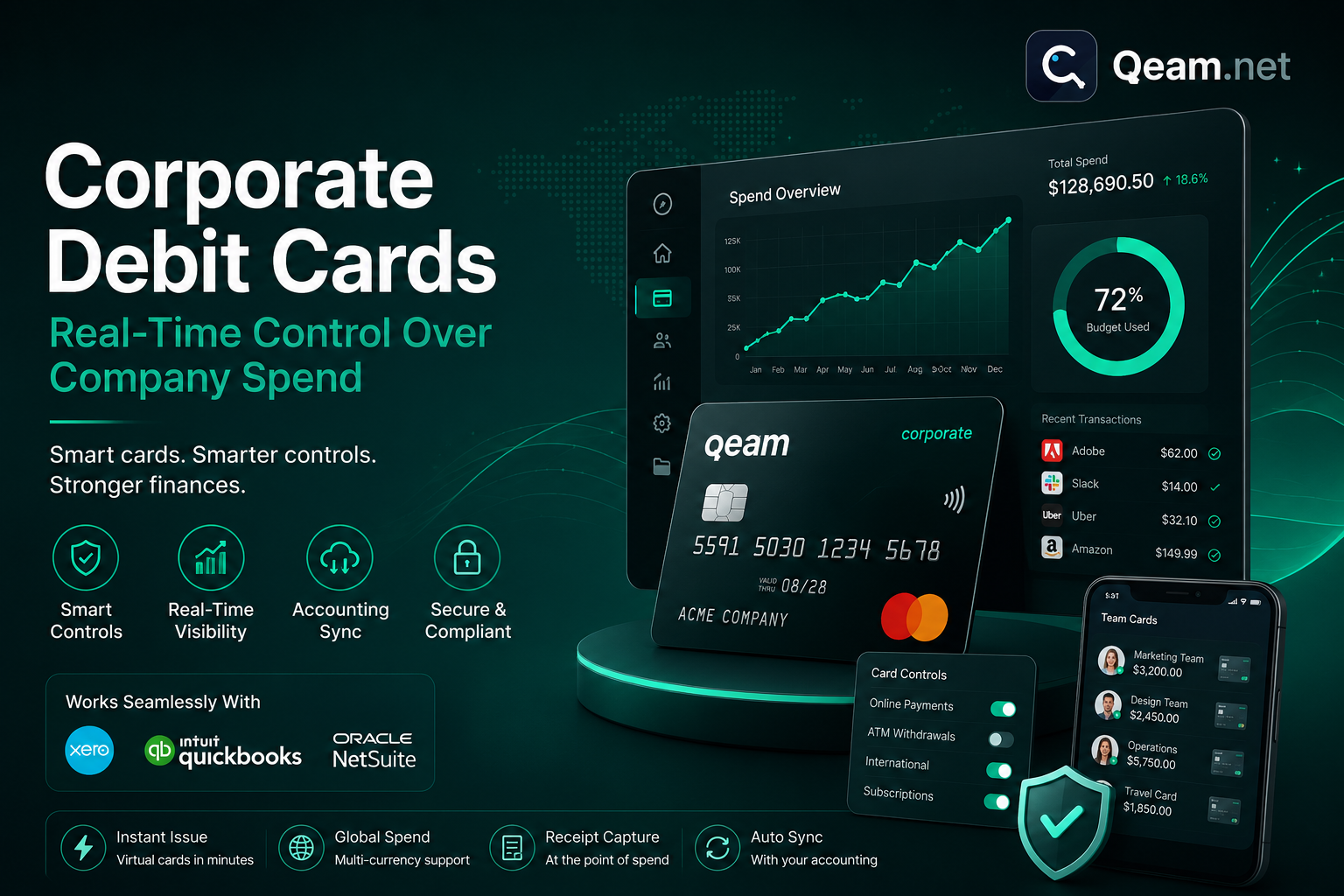
virtual cards: You can get a physical card for in-person purchases or a virtual card for online and subscription purchases.
Real-time controls: You can freeze a card. Change its limit right away.
Spend category locking: You can limit a card to a category, like travel or software.
Receipt capture: Employees can add a receipt to the transaction away.
Accounting sync: The transactions are automatically added to the companys accounting system.
Multi-currency spend: Employees can make purchases in countries with clear exchange rates.
Each of these features solves a problem with the way of doing things. They help with lost receipts limits that're too loose and spending data that is not seen until weeks later.
Proactive Spend Controls: Hard Caps, MCC Locking and Single-Use Virtual Cards
The best thing about a debit card is not the card itself but the rules that are built into it. Of approving or rejecting spending after it happens the controls are in place from the start.
Caps: You can set a limit on how much can be spent per card per employee or per time period.
MCC locking: You can limit a card to a category like marketing or design tools.
Use virtual cards: You can create a special card number for a specific vendor or subscription.
This changes the way things are done. Of relying on employees to follow the rules the card itself enforces them. The finance team does not have to chase after people who are not following the rules. They can just set the rules once. Be done with it.
Two-Way ERP and Accounting Automation: Syncing with Xero, QuickBooks and NetSuite
Every transaction on a card needs to be added to the general ledger. In the past this meant that an employee would submit a receipt a bookkeeper would categorize it. Someone would reconcile the card statement at the end of the month. This could take days.
With accounting sync each transaction is categorized away and added to the accounting platform in real time. This means that the finance team does not have to enter the transactions by hand. The categorization only happens once. The month-end close is faster because the books are already up to date.
Digital KYB Verification Without Director Credit Checks or Personal Guarantees
In the past it was hard for companies to get cards because they required a personal guarantee from a director or a hard credit check. This slowed down the process. Put the individual founders at risk.
Because a corporate debit card draws from the companys existing funds the underwriting process is different. Of checking the companys credit it is a Know Your Business (KYB) process. This involves verifying the companys registration and ownership. It also involves checking for sanctions and anti-money laundering.
No personal credit check is required. No personal guarantee is needed. The onboarding process is faster.
Developer. Embedded Cards: Programmatic Issuance via Cards-as-a-Service (CaaS)
For companies that are building their products on top of card infrastructure corporate debit cards can be used as programmable infrastructure. This means that cards can be created and configured as part of an automated workflow.
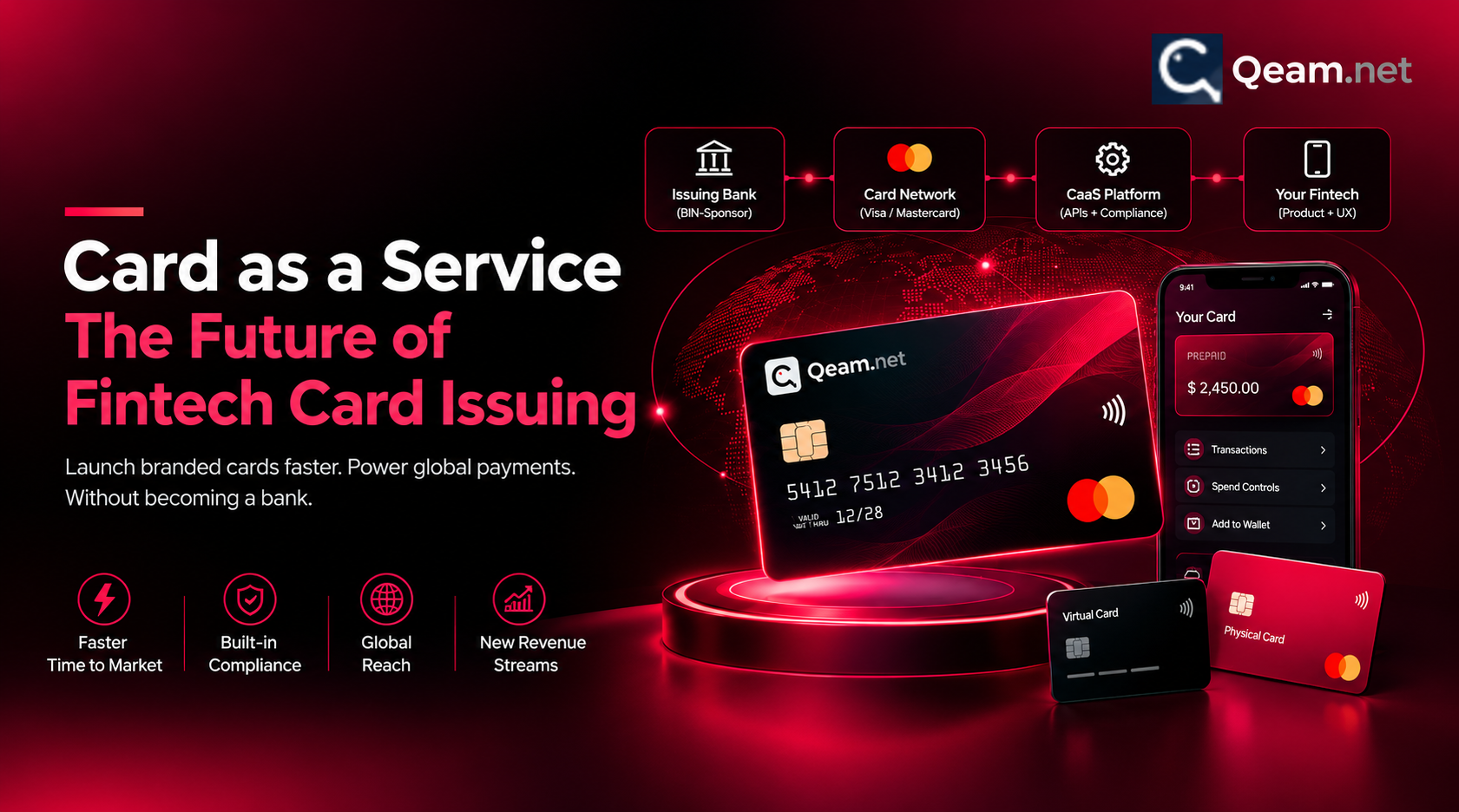
A Cards-as-a-Service (CaaS) API typically includes endpoints for programmatic card issuance. It also includes real-time authorization webhooks and embedded tokenized card details.
This is important for platforms that want to offer card issuance to their customers as a feature of their product.
Multi-Entity Governance and Role-Based Access Control
Businesses that operate across entities or subsidiaries have a different problem. They need to be able to see and approve spending across entities. Multi-entity governance addresses this with parent-level oversight and role-based access control.
This means that a holding company can view spending across all subsidiaries. A regional finance lead can manage cards. Approve limits for their subsidiary. A group CFO can retain visibility and override authority across all entities.
Who Uses Debit Cards?
Series A founder: Needs to see how much money is being spent and have expense governance without building a finance function from scratch.
Remote operations lead: Issues cards to a distributed team for travel and supplier purchasing.
Growth marketing lead: Uses MCC-locked or use virtual cards to control ad-platform and software subscription spending.
Fintech developer: Integrates card issuance into a companys product via API.
The common thread is that each of these people wants to see spending in time and have control over it.
Corporate Debit Card vs. The Old Way: Personal Cards and Reimbursements
Without a Corporate Debit Card employees use cards and file reimbursements. The spending data is delayed. Receipts are collected manually. There are no limits or loose limits.
With a Corporate Debit Card employees use company-issued cards. The spending data is, in time. Receipts are captured in the app. The cards have rules and limits.
Benefits Summary
Eliminate reimbursement workflows by providing employees with approved company spending tools.
Reduce fraud exposure through merchant restrictions, virtual cards, and instant card controls.
Improve cash flow visibility with real time transaction reporting.
Accelerate month end close using automated accounting synchronization.
Strengthen compliance through digital audit trails and centralized approval workflows.
Support international teams with multi currency spending and centralized oversight.
Enable embedded finance products using programmable card APIs.
Frequently Asked Questions
What is a debit card? A corporate debit card is a business-issued payment card that draws funds directly from a company account. It has spend limits and reporting built for finance teams.
Is a debit card the same as a corporate credit card? No. A corporate debit card draws from funds the company already holds while a corporate credit card extends a line of credit that must be repaid. Corporate debit cards typically involve underwriting since no credit is being extended.
Do I need a guarantee to get a corporate debit card? Generally no. Because the corporate debit card draws from existing company funds than credit most providers verify the business itself rather than requiring a directors personal credit history or guarantee.
Can spending limits be set per employee for a debit card? Yes. Limits can typically be set per debit card, per employee or per spend category and adjusted in real time without reissuing the corporate debit card.
How quickly are corporate debit cards issued? Digital- providers can often issue virtual corporate debit cards within minutes of approval with physical corporate debit cards following by post. The exact timing depends on the providers onboarding and compliance checks for the debit card.
Can a corporate debit card be restricted to a spend category? Yes, through merchant category code locking, which restricts a debit card to authorize only transactions in a defined category, such as travel or software.
Do corporate debit cards integrate with accounting software? Most modern corporate debit card platforms sync categorized transactions directly to accounting systems such as Xero, QuickBooks or NetSuite reducing reconciliation at month-end for the corporate debit card.
Can corporate debit cards be issued programmatically via API? Yes on platforms offering Cards-as-a-Service businesses can. Configure corporate debit cards through a REST API and manage authorizations via real-time webhooks rather than only through a dashboard for the corporate debit card.
The Bottom Line
Corporate debit cards have evolved beyond simple payment instruments into financial control platforms. They combine payment processing, automated expense management, compliance controls, accounting integration, and programmable APIs within a single infrastructure layer.
For startups, this means faster expense management and improved cash flow visibility. For growing enterprises, it delivers scalable governance across departments and subsidiaries. For fintech platforms, it enables embedded financial products through Cards as a Service APIs.
Organizations evaluating modern spend management should compare providers based not only on card issuance but also on policy controls, accounting integrations, developer capabilities, compliance standards, and multi entity governance. These capabilities determine whether a corporate debit card functions merely as a payment method or as a strategic finance platform.