Introduction
A corporate IBAN is an International Bank Account Number given to a registered company for handling a lot of payments between businesses in different currencies. Different from personal or small-business accounts in how it is set up how money is managed and how it connects with other systems. Companies are using IBANs along with virtual IBANs to make things easier save money on currency exchange and follow the law in the EU. This guide explains how it works, the rules and how to choose the provider.
Cross-border payments often go wrong in the way: a transfer takes three days to finish an invoice is rejected because the bank doesn't accept a "foreign" IBAN or a finance team spends a lot of time matching incoming payments to the right accounts. For companies that work with currencies and different business units these problems happen often. Not just sometimes.
I
A corporate IBAN, especially when used with IBANs is made to solve exactly these problems. Of dealing with many local banks a company can create thousands of unique account numbers under one main setup send money through fast or regular channels and get the information directly into the companys financial system. All while following the rules in the EU.
This guide looks at the way these accounts work how IBANs function at the technical level the networks that move the money the rules that apply and a way to compare different providers.
1. Understanding IBANs: Account Structure and Basic Ideas
1.1 Corporate IBAN vs. Regular Business Account vs. Personal IBAN
All three use the same format for IBANs but they are very different in who can use them and what they are for.
A personal IBAN is for an individual used for personal money moves and usually doesn't support many currencies. It needs a simple check to open. A standard business IBAN is for a business or sole trader handles day-to-day money and may support more currencies. It needs a check to set up and if there is API access it is limited and not connected to the companys financial system.
A corporate IBAN is built for bigger tasks: it belongs to a registered company is used for handling a lot of business payments and has full support for multiple currencies and direct connection to the companys financial system through automated messages. It requires a check and verification of who owns the company. The main thing that matters for the finance team is that it can be used as a starting point for different accounts updates and reports. Not just for storing money.
1.2 Dedicated Corporate IBAN vs. Shared Account Model
This is a part of the topic that is often confusing. It has real effects on how safe the money is.
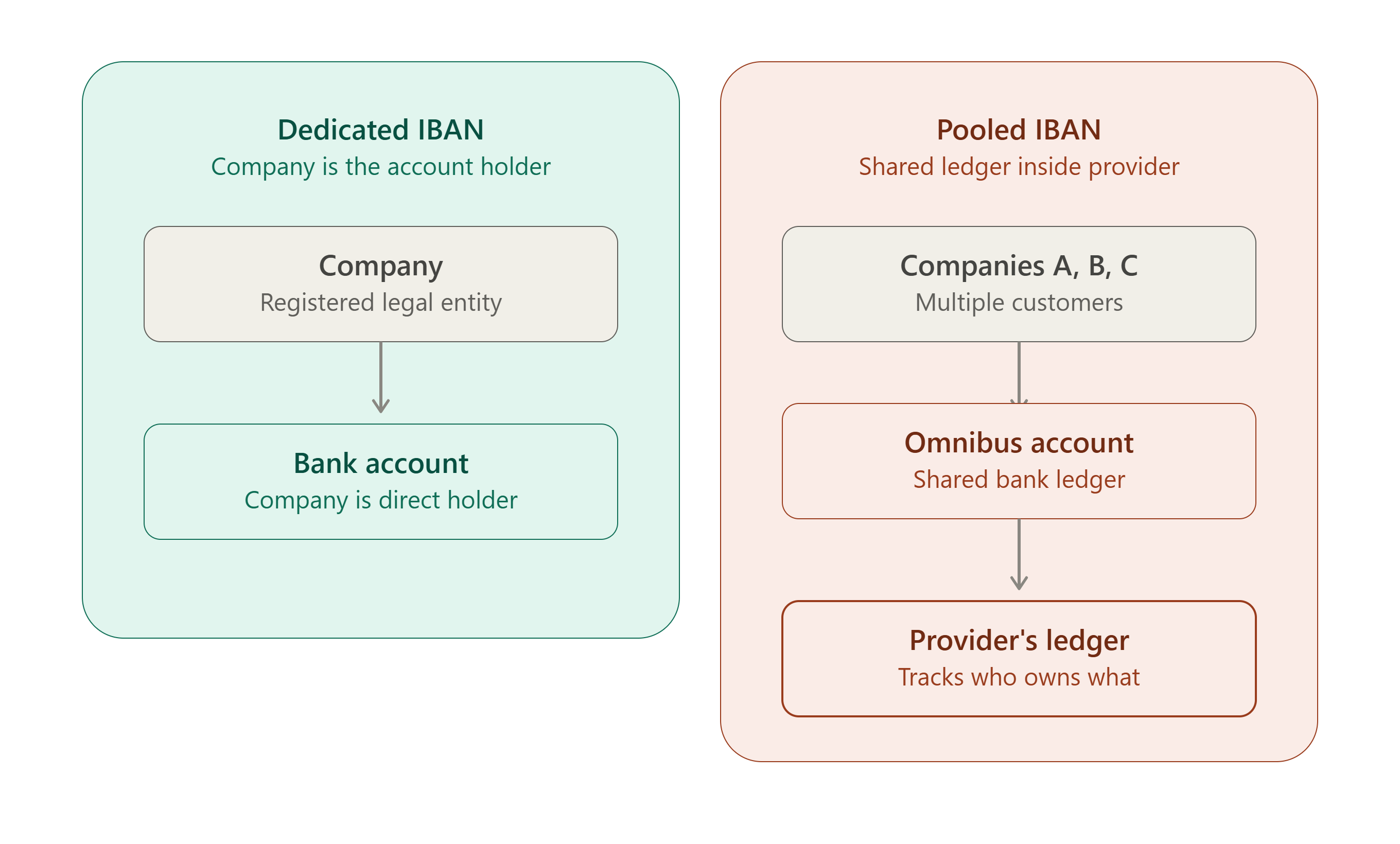
Dedicated corporate IBAN: The company is the owner of the account at the bank or the system that handles the money. The money is in an account that the company controls.
Shared (omnibus) IBAN: Peoples money is in one bank account owned by the service provider and the provider keeps track of who owns what. This is common with some companies offering "accounts.
Neither way is unsafe. They come with different risks if the company providing the account has money problems. That is why it's important to understand how the money is protected. Which is covered in section
2. Virtual Corporate IBANs (vIBANs): Tech Setup and Tracking of Small Accounts
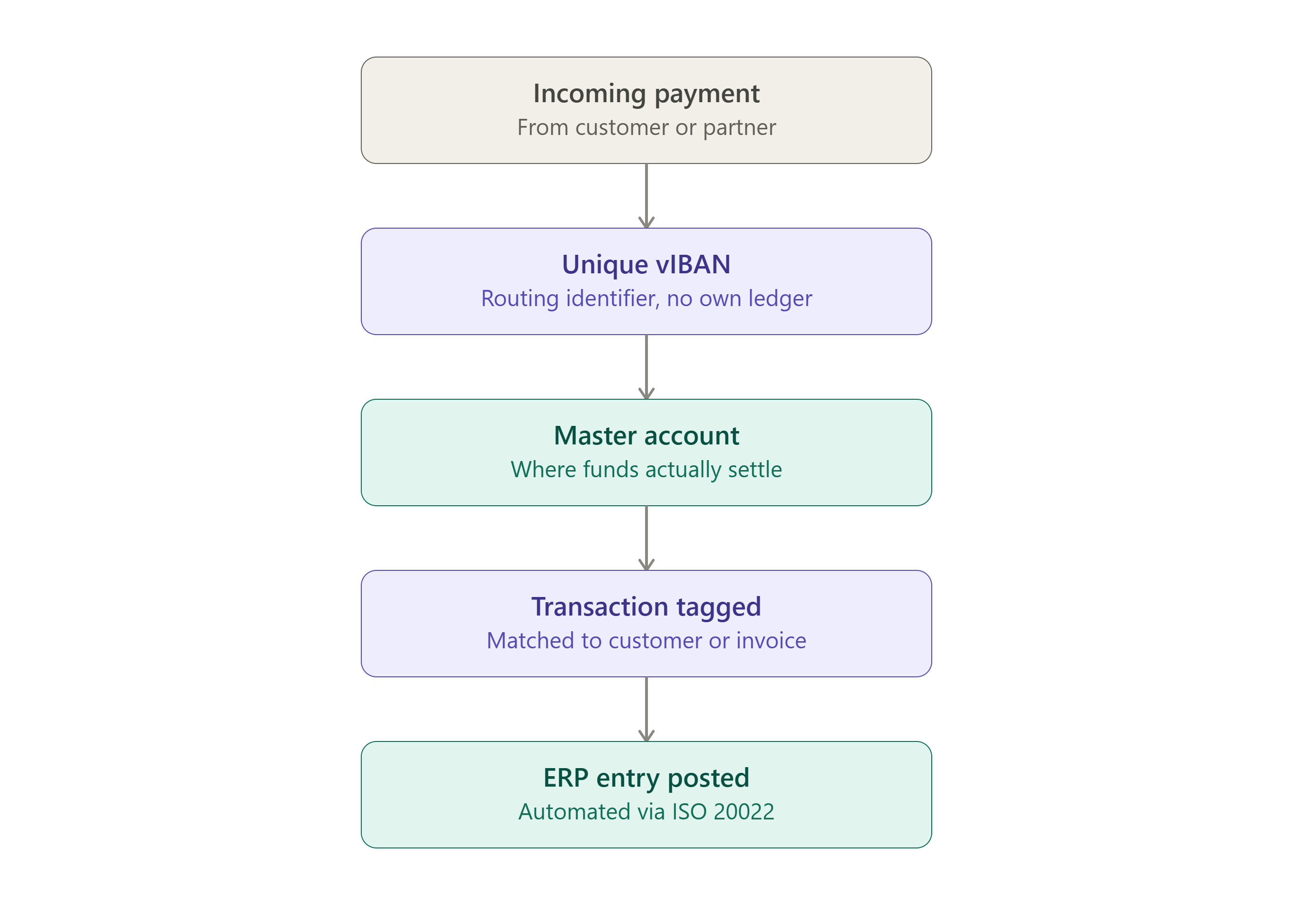
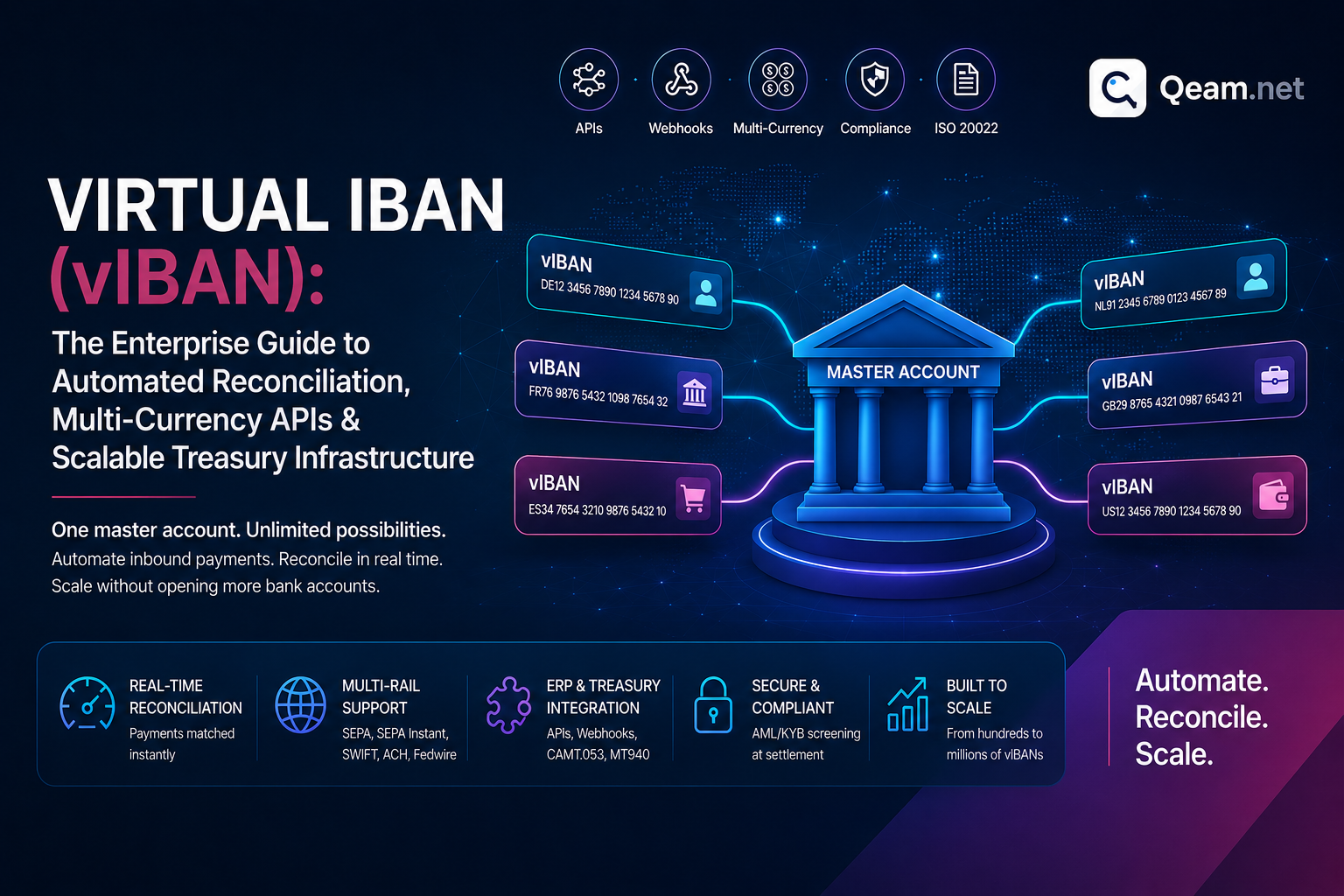
A virtual IBAN looks like an IBAN to anyone sending money but it is not on its own bank account. Instead it is a way to direct the money into an account and mark it for the right person, invoice or part of the company. For a platform or a SaaS company it means every customer or part of the company can have an account number without the provider needing to open many real bank accounts.
2.1 Automating How Small Accounts are Matched Using XML Messages
The main benefit of using vIBANs is when they are paired with data about the money. XML messages like camt.053, camt.054 and pain.001 give the finance systems machine-readable records that can be linked directly to the right entries in systems like SAP or NetSuite.
In practice this changes a process. Someone looking at a bank statement and matching it to an invoice. Into an automated system. A payment comes in to a vIBAN a message is. The system records the right customer entry in seconds.
2.2 Events, Real-Time Updates and Fixing Problems
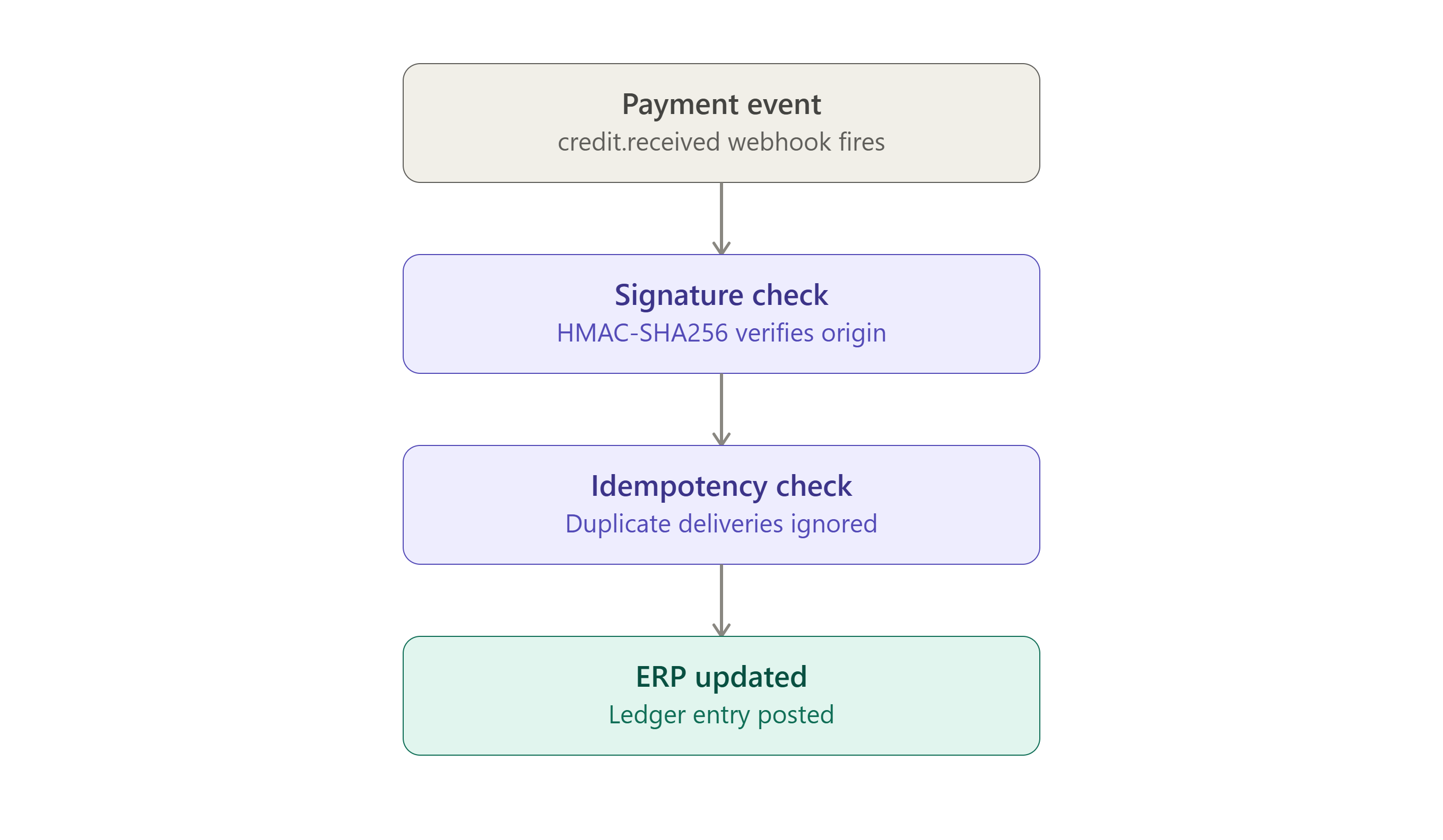
For engineering teams the vIBAN part is usually connected through events like credit.received or debit.processed. Good setups include:
Keys to make sure a message is not processed more than once if it needs to be sent
Signatures to make sure the message really came from the provider
Handling for messages that don't get through so that nothing is lost
Not paying attention to these details can cause problems. Like a payment being processed twice or a message that doesn't get through and a transaction is missed.
3. Managing Money Across the World: Saving on Currency Exchange and Using the Right Systems
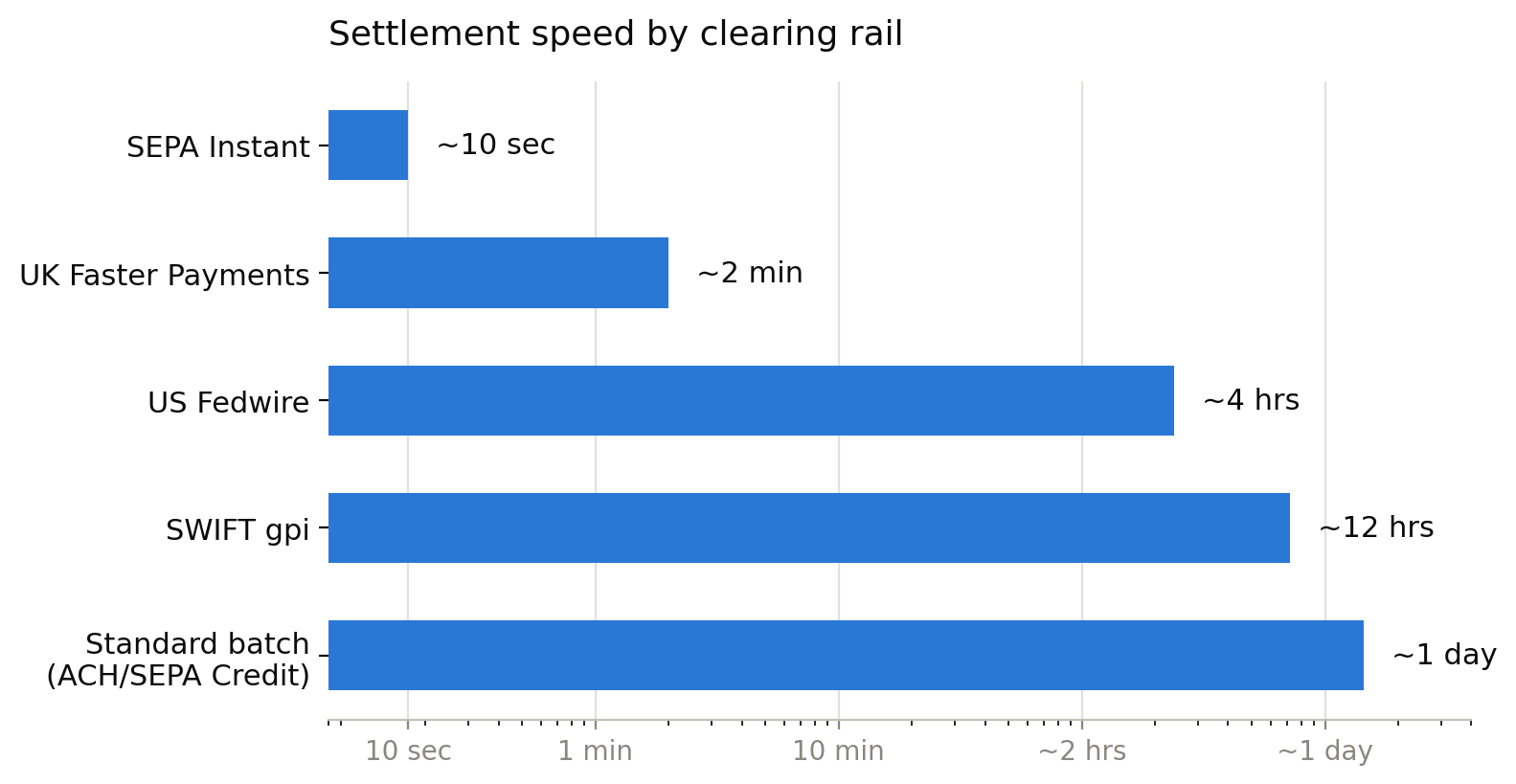
3.1 SEPA Instant (SCT Inst) vs. SWIFT gpi
SEPA Credit Transfer covers the Eurozone and settles in the day or next day with clear tracking. A good choice for regular payments in local currency. SEPA Instant is for the area but settles in under 10 seconds, which is good for urgent payments in euros. SWIFT gpi covers the world settles in the same day or next day and adds clear tracking. The best choice for payments that are not in euros when its important to know where the money is.
3.2 Other Payment Systems Around the World: ACH, Fedwire and Faster Payments
Companies that work outside the eurozone need other systems to avoid using expensive ones. In the United States ACH is used for low-cost batch payments like payroll while Fedwire is for high-value money transfers. In the UK Faster Payments send money quickly. Chaps is for large same-day transfers. Often used for things like property deals or big company payments.
Providers that only offer SEPA and SWIFT systems may send US or UK payments through expensive routes. Something to check when choosing a provider.
4. Rules, Keeping Money Safe and Legal Protection in the EU
4.1 Ending the Problem of Refusing IBANs: Rights Under EU Regulation 260/2012 Article 9
Article 9 says it is illegal for a company in the EEA to refuse an IBAN just because it was made in a different country. In practice this is not always followed, by payroll systems or some banks that use rules that block certain IBANs.
If a company runs into this problem it can file a complaint with the authority. Like BaFin in Germany or the FCA in the UK. And mention the specific rule.
4.2 Keeping Money Safe Following New Rules and Checking for Bad People
Because many corporate IBAN providers are not banks the money they hold is not covered by the same insurance as a regular bank account. Instead they must keep the money safe. In special accounts at a partner bank or in secure low-risk investments.
Also these providers must check for money laundering look for people on lists of actors and watch for unusual transactions. When choosing a provider it's worth asking how the money is kept safe and which lists they check. The answers can be very different from what they say.
5. Choosing a Provider: Big Banks, New Companies and Tech Tools
Big banks have protection and are well-known but they can be slow offer less access to technology and have unclear costs. FinTech companies offer setup, better support for different currencies and tools that are easy for developers. But they offer less insurance and support. BaaS tools are for companies that want to build their banking features. But they need more work to set up well.
5.1 Cost: Looking Beyond the Simple Fee
The cost to send money is not the whole story. The main costs at a scale are the money lost on currency exchange and the fees that go to other banks when money is sent. A provider that says it has no fee might still cost than one that has a small fee but a better exchange rate.
Examples
The following are examples of how these things happen. Not real cases from specific companies.
A company that sells things online can give each seller a vIBAN and pay them automatically as soon as a sale happens removing the time it used to take to match payments manually.
A company that sells software in the EU might find that some customers are having trouble paying because of IBAN rules. Adding IBANs and mentioning the law can help.
A company with money, in places can bring all the accounts together and save money on exchange rates by automating how money moves.
Frequently Asked Questions
What is an IBAN and how does it differ from a business account? A corporate IBAN is an account number given to a company that is officially registered for handling a lot of business to business transactions. It is usually used for handling currencies creating virtual numbers that act like separate accounts and making it easier to match payments with records in the companys software. These features are not usually found in business accounts.
How do corporate IBANs work for handling money in different currencies? A virtual IBAN takes payments that come in and puts them into one account. Each payment is marked with information about which customer or invoice it belongs to. This way the company does not need a bank account for each currency or each client.
Is it allowed to treat IBANs in the European Union? No it is not allowed. Rule 9 of EU Regulation 260/2012 says that a valid IBAN from another country in the European Economic Area cannot be refused. If someone does this it can be reported to the authority in the country.
What is the difference between a corporate IBAN and a pooled corporate IBAN? A dedicated IBAN means the company is the owner of the account at the bank. A pooled IBAN is part of an account that many people use and the company that manages it keeps track of who owns the money using their own records.
How long does it take to set up an IBAN account? The time it takes depends on the company and the provider. It can take a few days for simple cases with a financial technology company but it can take several weeks if the company is using a traditional bank that needs to check papers manually.
Are the money in an account provided by a financial technology company protected like money in a bank? Not exactly. The financial technology company usually has ways to protect the money like keeping it separate or putting it into risk investments. This is not the same as the protection that banks offer with their deposit insurance. So it is important to check what way the company protects the money.
Conclusion
Corporate IBANs have moved from being a back-office banking detail to a piece of core financial infrastructure one that determines how fast a company gets paid, how cleanly its books reconcile, and whether it's inadvertently violating EU payment law. The providers worth evaluating seriously are the ones that are transparent about FX spreads and safeguarding arrangements, and that treat API access and ISO 20022 support as standard rather than an add-on.
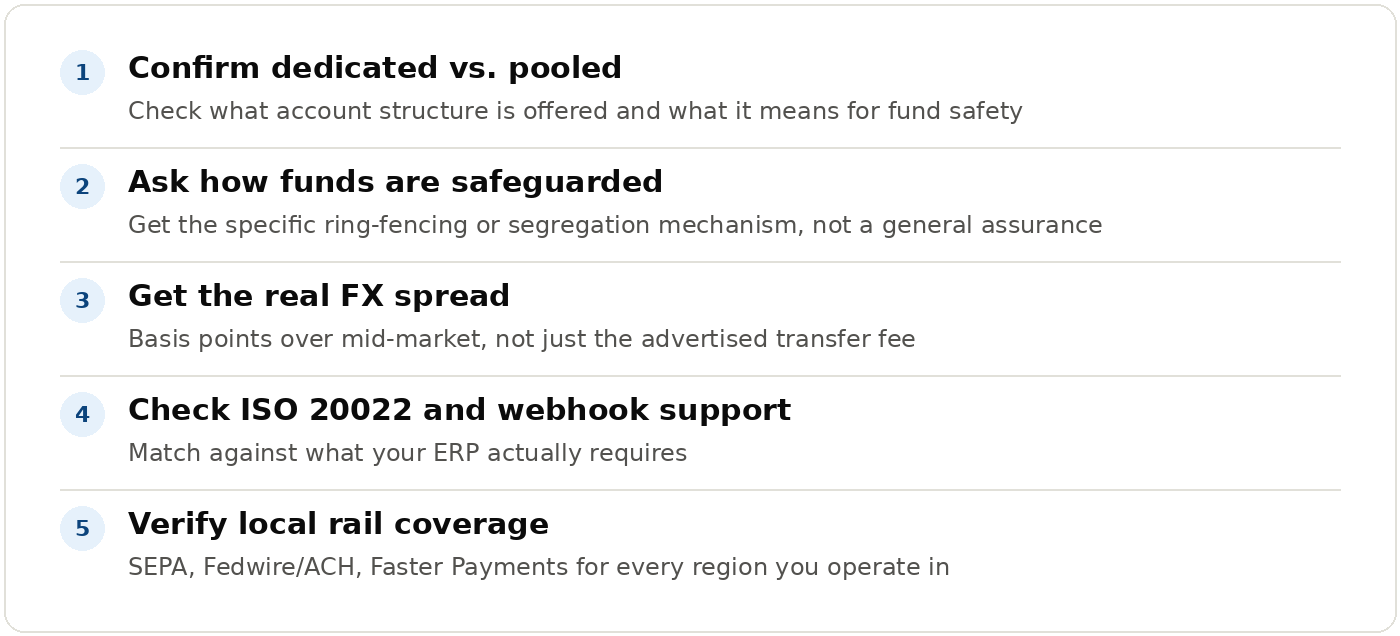
Before changing to a company here is a quick list to check:
Make sure you know if the account is dedicated or shared and what that means for keeping money safe.
Ask clearly how the company keeps customer money safe.
Find out the cost of exchanging money in basis points not just the fee for sending the money.
Check if the system can work with the software the company uses like ISO 20022 and webhooks.
Check the coverage, for payment systems in every place the company operates.